


Spirulina
A blue-green algae as a nutrient-rich superfood
In our demanding everyday lives, we all need to be flexible and provide our bodies with sufficient nutrients. Cyanobacteria have been around for billions of years. Also known as blue-green algae, the bacteria probably helped to enrich the primeval atmosphere with oxygen and were used as a favourite food by the Aztecs. They also change their form depending on the nutrient content and pH value of the water. Spirulina is a cyanobacteria and has other outstanding properties in addition to its adaptability and strong nutrient mix.
- Sale
- NEW
- Food
- Supplements
- Küchengeräte
- Alkaline Living
- Anthony William
-
Magazine & Recipes
- Recipes
- Worth knowing
- Keimling Partner
- Vegan diet
- Raw food diet
- Blog
- Keimling introduces itself
Filter products
–

Feines Bio-Pulver aus Mikroalgen – pur, natürlich und vielseitig in der veganen Küche einsetzbar.
(€63.80* / kg)
€15.95*
(€63.80* / kg)
Subscription
Available, delivery time: 1-3 days
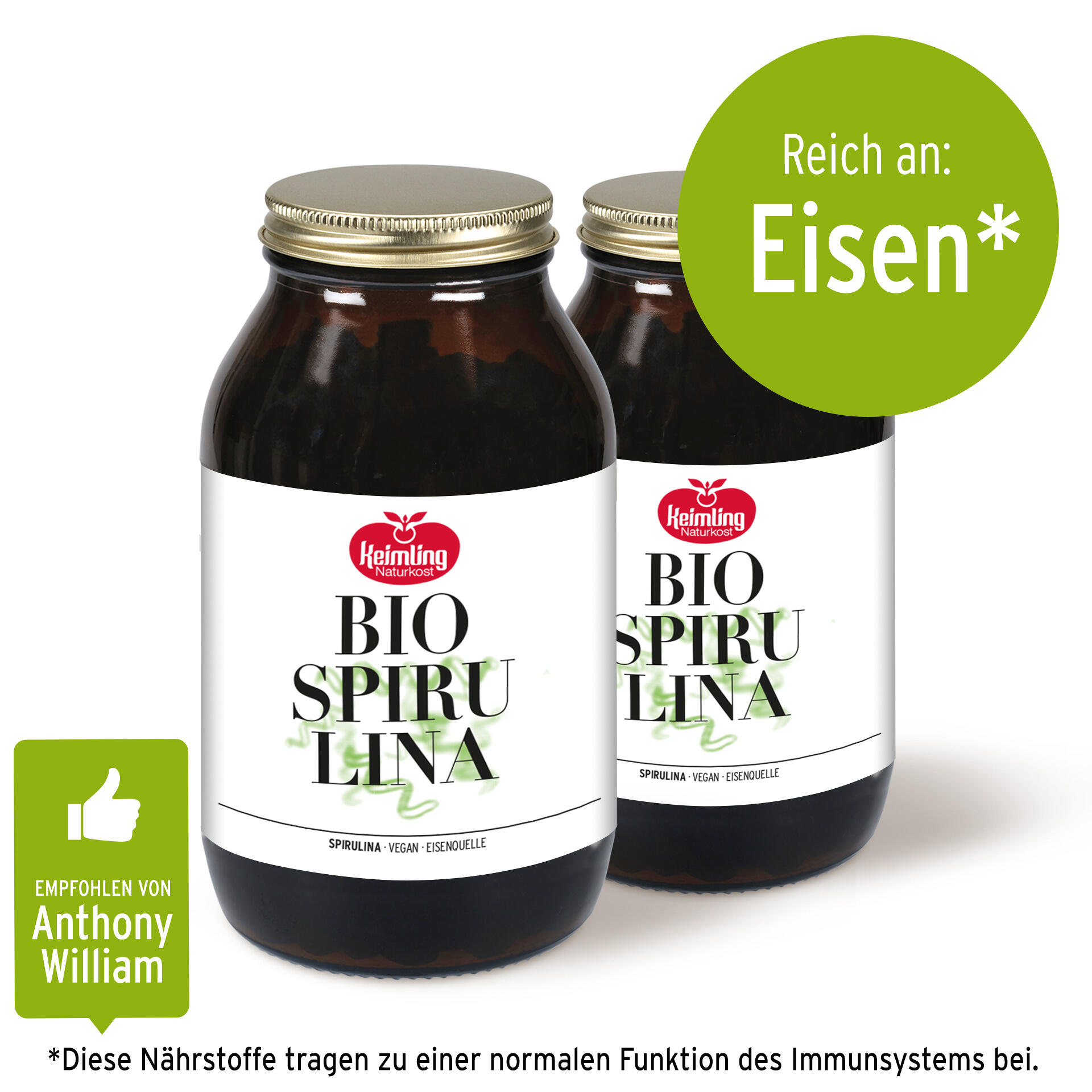
100 % spirulina with natural iron.
(€124.58* / kg)
From
€14.95*
(€124.58* / kg)
Subscription
Available, delivery time: 1-3 days
What do you need to consider when buying spirulina?
There are currently over 35 known species of blue-green algae. As they adapt to external conditions, the exact subspecies is only of secondary relevance. More important are the different processing forms of the superfood:
- Composition: Pure spirulina or as a mixture, e.g. with additives or other products
- Drying: Cold drying to sun drying possible, spirulina raw food quality particularly recommended due to low temperatures
- Processing: Organic quality should be the minimum standard
- Form: Spirulina powder, capsules, tabs, tablets, pellets and flakes available
- Packaging: From glass to plastic, glass or paper bags as safe and ecological forms of packaging
- Cultivation: Wide range from organic to conventional, in tubes or tanks or growing wild
When buying spirulina, pay close attention to where and how it is grown. We at Keimling pay attention to sustainable production with the shortest possible delivery routes.
Where does the algae come from?
Cyanobacteria naturally thrive in both salty waters and fresh water. In the wild, however, other algae or heavy metals can leave traces. You should therefore choose cultivated algae from aquaculture for nutritional purposes .
Ideally, the farm works according to organic standards and uses a mix of spring water and thermal water. Winter spirulina that has received too little sun or light is of lower quality. There is an increased risk of radioactive irradiation and less gentle processing at production sites outside the EU. You should therefore refrain from using these products.
What effect does the microalgae have?
These include
- Support for weight loss and detoxification
- Strengthening the immune system and cardiovascular system
- Improving blood lipid levels and lowering blood pressure
- Positive influence on cholesterol and blood sugar levels
- Good source of protein and protein source for athletes
- Antiviral and antioxidant effect
But what flavour can you expect when eating this miracle algae?
What does raw spirulina taste like?
Although the product is dried, it is still an algae. Most people describe the smell as reminiscent of seawater and the taste as slightly fishy with a spicy protein flavour. If these properties are too intense for you, simply take the nutritional power as a pellet or capsule.
Why is blue-green algae considered a miracle algae?
If you buy the algae, the ingredients are impressive. In addition to essential amino acids and 60 per cent protein, these valuable nutrients can be found in 100 grams of blue-green algae:
- 440 milligrams of magnesium
- 200 milligrams of selenium
- 550 milligrams of calcium
- 180 milligrams of beta-carotene
- 70 milligrams of iron
- as well as plenty of vitamin E and the important B vitamins
The related algae chlorella provides similar results, but is slightly behind in comparison. High-quality capsules contain around 400 milligrams of the superfood.
Spirulina powder vs. capsules - which is better?
Powder requires one less step in the production process than capsules. The powder therefore retains a large proportion of the valuable ingredients. Especially if you buy spirulina in raw food quality, the nutrient content is very high. Your favourite variant is also a question of taste.
The intensely flavoured powders or flakes are great as an ingredient in smoothies or as a spicy topping for bowls and salads. You can dissolve the pellets on your tongue or dissolve them in water. Capsules are simply swallowed with a little water. The pressed varieties are therefore ideal if you prefer a less spicy flavour.
Frequently asked questions
How do I store the organic spirulina powder and what is its shelf life?
Store the superfood in a dry, cool and dark place. If the product comes to you in a bag, simply place it in a screw-top jar or tin. Observe the expiry date on the packaging. Stored correctly, you can enjoy your powder for an average of 12 to 18 months.
Why is the powder green - does it contain colourings?
Spirulina does not contain any artificial colourings. The green-bluish colour is created by the pigments contained in the cell structure of the bacteria.
Who is spirulina not suitable for?
Test carefully whether you are allergic to the superfood, especially if you are prone to allergies. You should not buy spirulina if you suffer from the genetic disorder phenylketonuria. In principle, the algae can also be consumed during pregnancy and breastfeeding. However, you should clarify this with your doctor.
#keimlingnaturkost
follow us on Instagram
Subscribe to our newsletter and get a €10 voucher!