

Jannick Lüttge on "Optimal nutrient supply for vegan endurance athletes"

Instagram influencer Jannick Lüttge is a vegan endurance athlete. On his account, he provides tips on training and vegan nutrition. Jannick has compiled his basic knowledge on vegan nutrition for athletes for our readers.
On the one hand, there is a stubborn belief that a vegan diet and sport, especially endurance sport, do not go hand in hand; on the other hand, there are more and more documentaries such as The Game Changers, which consider a vegan diet to be the key to better performance.
What is possible with a vegan diet in competitive sport?
The fact is that vegans are becoming an increasingly large group in our society and the number of vegan athletes is also growing. Lewis Hamilton, Novak Djokovic, Valeska Schneider and Luisa Schulze, for example, speak openly about their diet, and Scott Jurek and Robbie Balenger are among them, especially in endurance sports. In April 2022, the latter openly sent a strong signal in favour of vegan nutrition in endurance sports when he ran 390 km in 77 hours, which is further than a Tesla on a single charge.
A balanced nutritional philosophy is essential for all athletes to meet their micro- and macronutrient requirements. Vegan athletes should pay particular attention to their intake of iodine, iron, calcium and B12 (which should be supplemented). I would like to go into more detail below about other supplies.
Carbohydrates, proteins and fats - fuels for our bodies
Our body draws the energy for all our physical activities from the three basic nutrients - carbohydrates, fats and proteins. How much of each component our body utilises depends on the intensity of our training - but carbohydrates are particularly important in a vegan diet. Our body uses these to top up our glycogen stores. It draws on these especially during performance peaks. It can be said that athletes should consume around 6 to 10 grams of carbohydrates per kilogramme of body weight per day. Especially before intensive training and competitions, we should consume at least 8g per kg of body weight. Good sources of carbohydrates include red lentils, chickpeas, quinoa, potatoes, oatmeal and pasta.
When it comes to proteins in particular, many vegan athletes encounter a lack of understanding or the theory that proteins consisting of meat are better. However, plant-based protein sources are considered to be of higher quality and contain more unsaturated fatty acids, which makes them easy to digest. It doesn't matter which foods our proteins come from, the important thing is that we absorb them, especially for strength athletes. Among other things, they serve to renew worn proteins. The German Nutrition Society recommends 0.8g of protein per kilogramme of body weight for non-athletes and 1.2 to 1.4 grams for endurance athletes, as the maintenance requirement for muscle regeneration or increased metabolic processes increases. Muscle building even requires 1.5 to 2.2 grams. Depending on your current goal, it is therefore helpful to vary the amount of protein you consume. In addition to vegan protein powder/protein powder, lupins, chia seeds, peanuts, oat flakes, linseed, lentils, soya beans and tofu are also considered protein sources.
Fats are important for our body as carriers of vitamins A, D, E and K, but also for building cell membranes. During long periods of endurance exercise, they also serve as a source of energy that our body uses. When it comes to fats, however, it is important to note that excessive consumption of fatty foods is unnecessary ballast on the one hand and that an undersupply is associated with a loss of performance on the other. For endurance athletes, fat should therefore make up around a quarter of the total daily calorie intake. The decisive factor here is the composition of the fats consumed. Equal proportions of saturated, monounsaturated and polyunsaturated fatty acids should be consumed. Omega-3 and omega-6 fatty acids in particular play an important role in regeneration. Saturated fatty acids are found in nuts and seeds and in various oils and margarine. Monounsaturated fatty acid sources include olive oil, macadamias, cashews, peanuts, hazelnuts and avocados. Polyunsaturated fatty acids are found in Brazil nuts, pumpkin seeds and almonds.
Increased vitamin and mineral requirements
In addition to the macronutrients already mentioned, vegans can almost easily cover their micronutrient requirements with plant sources. Athletes should pay particular attention to a sufficient intake of sodium, potassium, calcium, magnesium, iron and copper as well as vitamins B1 and B12. These micronutrients in particular are used up in the body during sporting activity and must be sufficiently available. Foods in raw food quality and nuts that are cracked open by hand should also be emphasised here. These maximise the vitamins and enzymes they contain as they are considered untreated. In addition to treatment with sulphur or dehydration, nuts are pre-treated in hot oil or water for cracking, for example, so that some of their nutrients are lost.
To summarise, it can be said that vegan athletes can perform just as well as non-vegan athletes on a balanced diet. It is often said that one diet is better than the other. However, in my opinion, it is only important to pay attention to the individual components in order to achieve equivalent results. I don't measure my ingredients myself, but simply pay attention to balance in everyday life.
Vegan through an exemplary day
- In the morning - muesli with soya yoghurt, various nuts, chia seeds and fruit
- Mid-morning snack - smoothie (recipe below)
- Lunch - quinoa salad with vegetables, nuts and tofu
- Afternoon snack - Sandwich with avocado cream and sprouts
- Evening - Soya strips with various vegetables and potatoes
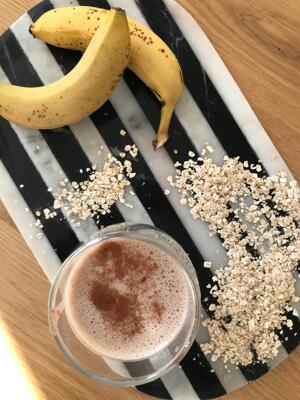
Smoothie recipe (2 portions)
- 1 medium-sized banana
- 600ml milk alternative (I like to use oat or almond milk)
- 2 tbsp vegan chocolate protein powder
- 4 tbsp rolled oats
- 1/2 tbsp organic peanut butter if required
Depending on the blending power, put all the ingredients in the blender together or puree the banana with the milk first and then add the remaining ingredients and blend briefly.
Then fill and enjoy.
Related products
Available, delivery time: 1-3 days

Available, delivery time: 1-3 days

Available, delivery time: 1-3 days