

Maria Knoch from Maunawai on the importance of water filters
M. Knoch is a graduate economist, health and nutrition consultant and founder of the company Maunawai Wasserfilter. In this interview, she reveals why it makes sense to treat our most controlled foodstuff - water - with a water filter.
Why does it make sense to filter your tap water?
Tap water in Germany is considered the best controlled and safest foodstuff, so why should we filter it anyway? The water quality at the waterworks is indeed impeccable, but then the water has to travel through pipes from the waterworks to the consumer's tap.
On the way from the waterworks to our homes, however, the water can be exposed to impurities and contamination. That's why we should filter and purify the water we drink or use for cooking in particular.
By the way: Did you know that Anthony William, also known as "Medical Medium", recommends gravity water filters for purifying and revitalising ordinary drinking water?
How did you become interested in water treatment?
Maria Knoch has been involved with the topic of water treatment for over 30 years. Her son, who was to be treated with cortisone after several years of unsuccessful treatment for his neurodermatitis, got her thinking. She became intensively involved with the topics of health and nutrition. As part of her research, she came across water filters based on the so-called PI technology from Japan. She obtained the rights from Dr Shinji MAKINO (Prof Shoi YAMASHITA's assistant) to sell the water filters for the production of living water, "PI® water". In 1985, "PI water" was also protected worldwide as a trade mark. PI water differs from conventional tap or spring water in that its biological and physical properties are very similar to the body's own cell water. This "vitality" and the energy field can be visualised very vividly using Kirlian photography.
The company name Maunawai comes from the Hawaiian language and means mountain water. After all, what could be purer than spring water from the mountains?
What exactly is PI technology?
Prof Shoi YAMASHITA and his assistant at the time, Dr Shinji MAKINO, had been working on the subject of "living water" since 1964. They asked themselves what is the healthiest water for humans. Their research took them to various regions, where they compared the water quality with people's state of health. They found that in places where people enjoyed particularly good health, there was a harmonious balance between minerals and trace elements. This was natural, high-quality spring water. The Japanese scientists set themselves the task of "recreating" this natural water. No electricity or chemicals are required for this and no ion exchanger is used. Gravity serves as the energy source and nature serves as the model for filtering. In nature, water is effectively filtered through the various layers of rock and then emerges elsewhere as purified spring water. The Maunawai water filters are also based on precisely this principle. The filtering process is multi-stage. First the coarse particles are filtered out, then the coconut granulate layer filters out pollutants such as heavy metals, pesticides, herbicides and hormone residues. The heart of the Maunawai filter with PI technology is based on many small ceramic balls made from ancient clay. These Urton particles imitate nature and ensure that water is produced that corresponds to natural spring water.
Does it make sense to bring the water treated by the Maunawai filter into contact with gemstones?
Of course you can, but it is not necessary.
What do I do if I don't want to do without my spring water when travelling?
I can take the Maunawai Kini jug water filter with me in my suitcase, I can leave the cartridge to drain for 2 days after my holiday and then freeze it in a freezer bag for the next trip.
What about bacterial contamination of the water filter?
Maunawai Filters are regularly tested by various laboratories, including long-term tests lasting 2-3 years. They always achieve top results. New filters are also subjected to this procedure again and again. If used correctly and the filter change intervals are adhered to, there is no risk of contamination.
Where are the Maunawai filters manufactured?
Originally, 30 years ago, production was in South Korea. Today, for example, the Kini filter is produced entirely in Germany, the glass housing of the table filter (source) in a small family business in the Czech Republic, the upper part is made of high-quality plastic and comes from South Korea.
The plastic of the Kini jug filter is manufactured in Germany; it is a food-safe SMMA plastic developed in Frankfurt, which is only used in medical devices. Tests with hot oil have shown that the plastic does not release any undesirable substances (into the water).
Some customers report a bitter taste in their mouth after drinking Maunawai spring water, how can this be explained?
Drinking the purified spring water can lead to the elimination of toxins in some people, these are then also present in the saliva and can be the cause of the bitter taste. Many people also report more frequent urination after drinking, but this is only the case for the first few days until the body has become accustomed to the water. There are also reports that the quality of sleep has improved after drinking Maunawai water for several months.
What do I need to bear in mind when using and maintaining the Maunawai water filter?
It is important not to place the cartridge in the sink, where it may come into contact with germs or impurities. It is always advisable to place it on a clean surface, e.g. a plate. The jug should not be cleaned with washing-up liquid or in the dishwasher, but preferably only with vinegar or lemon water.
Of course, it is also important to change the filters regularly, with 3 months being a guideline. Depending on the limescale content of the tap water, the limescale pad may need to be replaced sooner. With the ceramic filter in the top section of the Maunawai source, you can check whether the water has run through completely overnight. If this is not the case, simply clean the ceramic filter thoroughly with a fresh sponge, but this is highly dependent on the quality of the source water. The cartridge in the table filter source can be used for 10-12 months. As with the jug filter, the limescale pad should be replaced according to the water hardness, or monthly if the water is hard. The glass container of the spring only needs to be cleaned if it is visibly contaminated; there is no need to clean it weekly, as this is where the pure filtered water ends up.
How did the Maunawai water filters become known?
In the early days, it took many thousands of kilometres on the motorway and presentations at numerous trade fairs to achieve a certain level of brand awareness. There is now a large distribution network of doctors, alternative practitioners and fasting clinics. Of course, word-of-mouth is also an important part of success and the best advertising for a good product.
How important are minerals in water?
The most natural water for humans is spring water, which always contains minerals. There is no spring water without minerals and trace elements. Only pollutants such as heavy metals should be removed. The special feature of the Maunawai water filter is that the ceramic particles add the minerals or trace elements required for harmonious spring water to the water, even if they are missing in the original water.
Can I also benefit from PI technology if I already have a water filter?
Yes, because then you already have a good source water. In this case, the Kini jug water filter is sufficient, which thanks to its technology improves the water by removing any critical substances and adding useful others.
What is planned for the future?
The company Maunawai is currently working on taking back the filter cartridges from customers and recycling them for a more sustainable world.
Further information:
"Table filter K8 source " www.keimling.de/maunawai-pi-prime-k8-quelle-tischfilter/
"Kini jug water filter " www.keimling.de/maunawai-kini-kannenwasserfilter/
Skip product gallery
 €429.00*
€399.00*
Subscription
€59.95*
Subscription
€69.95*
€59.95*
Subscription
€429.00*
€399.00*
Subscription
€59.95*
Subscription
€69.95*
€59.95*
Subscription
Related products
Discount
-7%
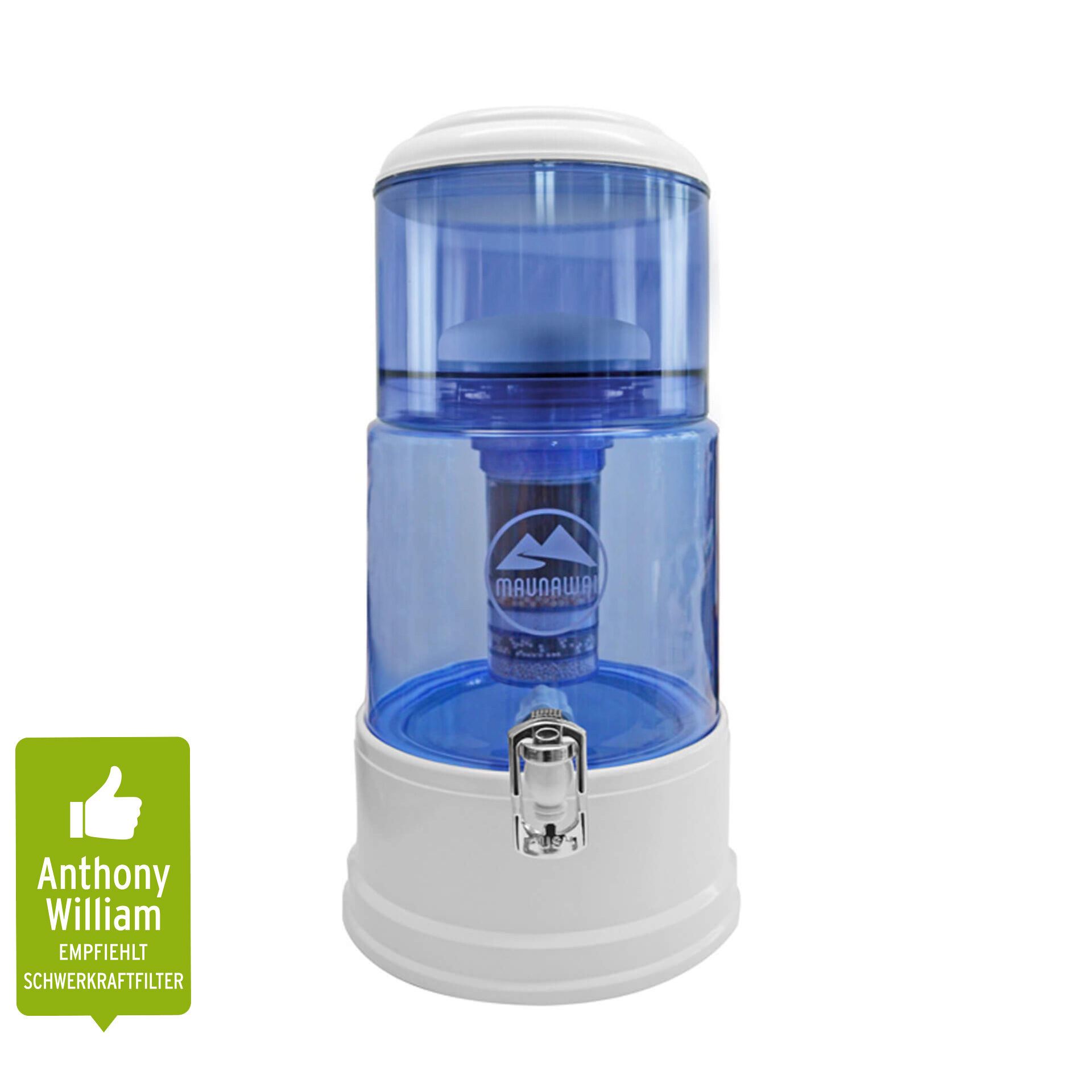
Gravity filter - for medium and hard water
Currently not available
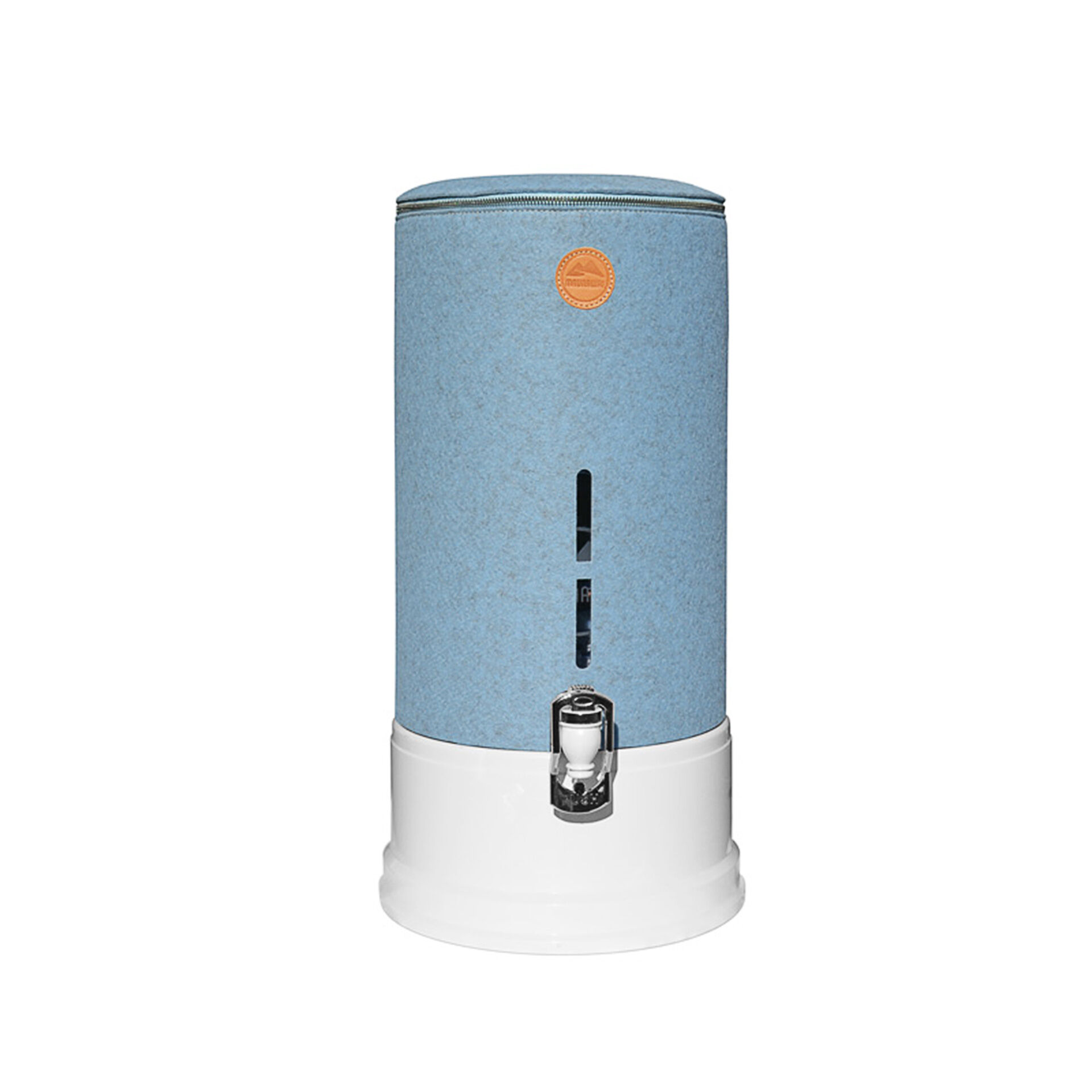
Protective cover for Maunawai PI PRIME K8 Quelle table filter
Currently not available
Discount
-14%

Currently not available