

Marcus Schall: Why freshly squeezed juices are such important sources of nutrients - and how we can best utilise them for our well-being.
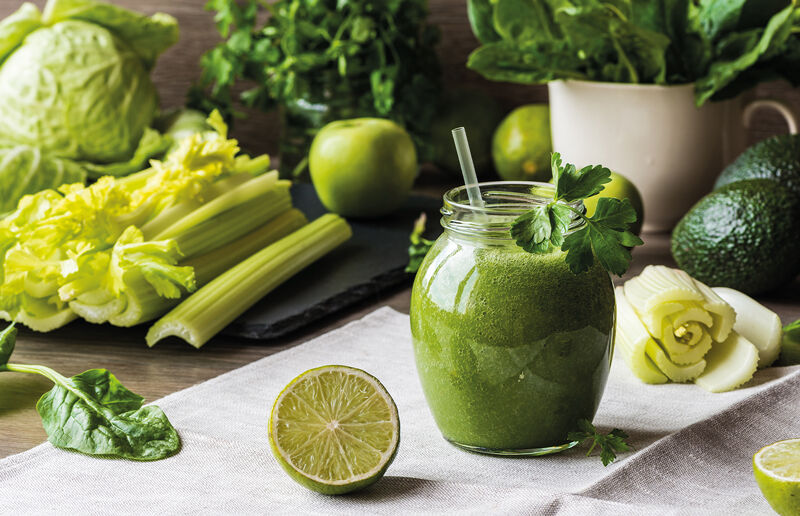
Guest author Marcus Schall, a nutritionist and performance food coach, knows what is important when it comes to healthy eating and why freshly squeezed juices should be an essential pillar of a healthy diet.
Marcus Schall, www.supergoodfood.info
Our modern lifestyle and the associated eating habits are presenting us with ever greater health challenges. It is not only the poor quality and low nutrient content of industrially produced food and convenience products that is a problem. The ever lower nutrient content of agricultural products also means that our bodies have less and less of the really important nutrients at their disposal. Conventional agricultural monocultures and the intensive use of fertilisers result in depleted and nutrient-poor soils on which truly nutrient-rich fruit can no longer grow. But even organic and Demeter vegetables no longer contain as many nutrients as they did 100 or 200 years ago. In addition, the juices available on the market are usually pasteurised. This process preserves the products and kills the microorganisms responsible for spoilage. However, valuable ingredients are also lost in the process.

Heat-sensitive vitamins and enzymes are affected and the nutrient content is once again impaired. These juices therefore no longer have much in common with a living and original food.
It is therefore all the more important that we adapt our diet accordingly and consume as many fresh and raw vegetables as possible. Slow juicing offers decisive advantages here. One of the biggest advantages of freshly squeezed juices is that they allow us to consume the valuable ingredients of fresh plants quickly, conveniently and in really significant quantities. Without a lot of chopping, without a lot of effort. Wash the ingredients, chop them up, pop them in the juicer and you're done! The slow juicing process squeezes all the nutrients out of the cells, while the gentle processing at low temperatures and without oxygen ensures that they really do end up in the juice. What's more, freshly squeezed juice absorbs the nutrients better and to a greater extent than food that has often been insufficiently chewed. The juicing process makes the ingredients available in a way that our body would only be able to do through several steps in the subsequent digestive process. The healthy ingredients can therefore be absorbed better and faster. In this respect, drinking freshly squeezed juice offers numerous benefits that you should utilise for your health and well-being. Preferably on a regular basis and with the whole family.
In terms of preparation and combination, there are basically no limits to creativity. In terms of nutrient density on the one hand and sugar content on the other, vegetables and salads should be favoured. Adding fresh herbs such as parsley or wild herbs makes it even more nutritious and healthy. Plants from wild collection, such as nettle or dandelion, are also suitable for juicing. Basically, the greener, the healthier, the better. In this way, we supply our body with a whole arsenal of valuable and bioactive ingredients that we would otherwise rarely consume, even if we were to eat a very healthy diet. This applies in particular to the supply of secondary plant substances and chlorophyll. These healthy and heat-sensitive components are completely preserved during slow juicing.
Consumed regularly, slow-pressed juices make an important contribution to a healthier lifestyle rich in vital substances.
Related products
Available, delivery time: 1-3 days

Available, delivery time: 1-3 days

Available, delivery time: 1-3 days