

Growing your own herbs for cooking - here's how to do it step by step
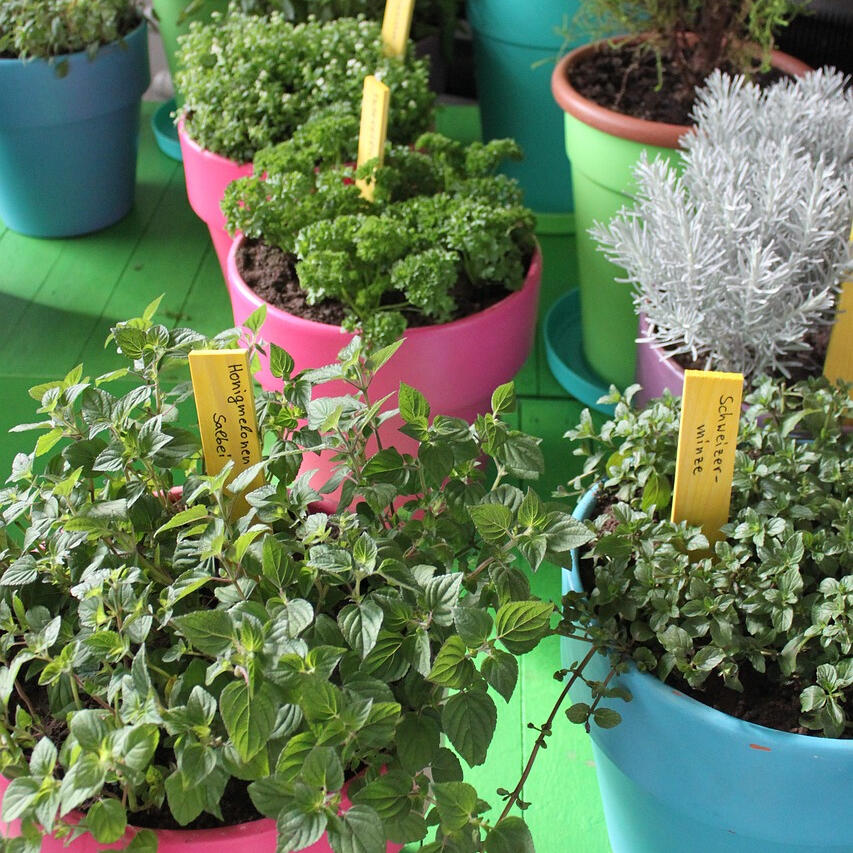
Herbs play an important role in the kitchen, as they have health-promoting ingredients on the one hand and a unique flavour on the other. They also come in a wide variety of flavours, making them ideal for a wide range of culinary experiences. So why not grow your own herbs? If you take a few things into account, it's not that difficult. Let's take a look at how it works step by step.
Step 1: Choose the right planters
The great advantage of planters is that they are portable, allowing us to place the herbs in accessible locations with light. In addition to the size of the planters, the number of drainage holes is also important to prevent waterlogging. Many of the planters from the expert Pflanzwerk.de are well suited to growing herbs. They are available in various shapes and sizes. The planters also have a beautiful design, which makes them look good both indoors and outdoors. They have even been honoured with the German Design Award for this.
Step 2: Prepare high-quality soil
As with planting various foods, it is important to choose the right soil. Which soil is best ultimately depends on the herbs in question, but the herbal soil available on the market is generally suitable for most species. This is because the soil is well-drained and contains the necessary nutrients.
Step 3: Selecting herbs for planting
This point is self-explanatory, but not so easy. After all, there is a huge selection of herbs. The good thing is that you at least only have to limit yourself to culinary herbs. This eliminates some species that are primarily used as medicinal herbs. In any case, these should be herbs that are easy to grow in planters and do not require a lot of effort to care for. Some potential options are basil, parsley and rosemary.
Step 4: Plant herbs with sufficient spacing
Planting herbs is not difficult in itself. Basically, you just need to make sure that there is enough space between the herbs, otherwise they won't be able to spread properly. The soil around the plants should also be lightly pressed in.
Step 5: Place the planter in a sunny spot
Herbs can only grow if they get enough sun. It is therefore essential that they are placed in a sunny spot. Ideally, they should receive around six hours of direct sunlight a day. If they don't, they will grow more slowly or may even die. To counteract the lack of sunlight in winter, hobby gardeners can resort to measures such as artificial lighting with growth-promoting lamps. Incidentally, it is not just the sunlight itself that is important, but also the associated warmth. Temperatures therefore also play a role in growth.
Step 6: Water herbs regularly
Like other plants, herbs need to be watered regularly. The soil must always be moist, regardless of the location. However, overwatering should be avoided. In the worst case, overwatering can cause the herbs to die and it is not always possible to save them.