

Healthy food for the cold season - preserving fruit and vegetables without heat
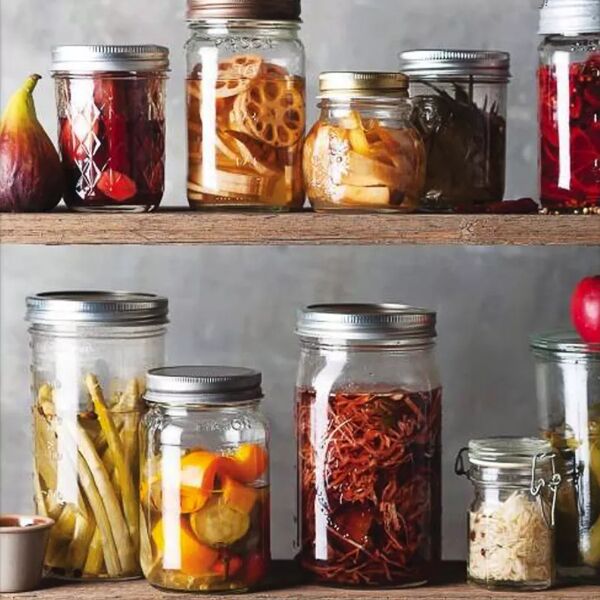
Preserving fruit and vegetables without heat is easier than you might think. Below we show you the best methods for fermenting food.
When nature goes into hibernation, the selection of fresh seasonal fruit and vegetables is also less varied. But with "living preservation", garden harvests or favourite vegetables can be stored in an uncomplicated, resource-saving and tasty way. But it's not just fresh food that gets that certain acidic kick; nuts and seeds can also be fermented to make plant-based spreads, cheese substitutes and yoghurt
. fermentation is more than a thousand years old and preserves food without heat. The advantage of fermentation is that, unlike the popular method of preserving or storing plants, most of the vitamins are retained. This means we can also access the healthy summer treasures in winter.
Why is this important?
A good three quarters of the immune defence takes place in the gut. Around 70 per cent of all immune cells are found here. If the intestinal flora is rather weak, the susceptibility to various diseases increases. The lactic acid bacteria produced during fermentation favour the intestinal flora and simplify the work of the gut, produce enzymes and vitamins such as vitamin K, and make fruit, vegetables, nuts and seeds even more digestible.
Fun fact: 30 percent of the food in a conventional supermarket is actually fermented. For example, all sour vegetables, cocoa, coffee, black tea, tempeh, miso, yoghurt, cheese or even beer and wine. In contrast to many industrially fermented foods, wild fermentation preserves all nutrients and beneficial cultures. This is because in the food industry, the ferments have to be pasteurised, i.e. heated to a high temperature, after the fermentation process. However, this destroys the important lactic acid bacteria and enzymes.
Fermentation in your own kitchen means slow and careful maturing of food. During fermentation, enzymes and vitamins are produced that are only present in a few non-fermented foods. However, this process does not work overnight:
The basics of fermentation
Robust glass is best suited for fermentation: It is robust, does not absorb odours, does not release harmful substances such as plasticisers and is easy to clean. There are ideal fermentation attachments for so-called Mason jars. This allows the gases to escape through a small valve without letting oxygen in. Thanks to their wide opening, they are easy to fill and empty. For preparation, the fruit or vegetables should ideally be grated to maximise the surface area. Iodine-free salt is then added and the food is mashed until it stands in its own juices. The salt draws out the water; the resulting brine separates it from the air. Now the microorganisms that initiate fermentation can start their work. Within the first two days, the fermentation process slowly gets underway and the remaining oxygen in the glass is consumed by the microorganisms. This produces carbon dioxide, which can be easily recognised by the rising bubbles in the glass. Germs that would spoil the ferment cannot thrive in this acidic environment. How long the fermentation process actually takes depends on the vegetables, the room temperature and the desired flavour. To stop the fermentation process, the vegetables should be stored in a cool, dark place. This means that the ferment can be kept for many months.
Fermenting with a guarantee of success
If you don't want to rely on your own skill or trial and error, you can find reliable kitchen aids and plenty of inspiration at Keimling Naturkost offers reliable kitchen aids and plenty of inspiration. The space-saving Smart Fermenter from Kuvings makes fermentation child's play. The automatic programme settings and manual operation via the one-touch menu ensure a constant, even temperature and therefore the ideal conditions for preserving ripe fruit and vegetables or creating fine ferments such as oriental salted lemons, ginger syrup and your own wine. Because what can otherwise take several weeks at room temperature is reliable and quick with the controlled temperature control from 20°C to 65°C and a timer function from 1 to 99 hours. The Kuvings Smart Fermenter is designed for the various stages of fermentation and is particularly hygienic: The removable container with handle is completely BPA-free and can be cleaned in the dishwasher, as can the cheese insert and all other moving parts. And with its square shape, the appliance even fits into small kitchens.
Fun fact: A constant temperature can be set in the Smart Fermenter - regardless of whether you are fermenting, rising bread dough or ripening fruit. This means that fermentation in your own kitchen is independent of the sometimes fluctuating room temperature.
What makes fermentation so special?
- A healthy store cupboard
Fermented fruit and vegetables are the ideal addition to any food store - for healthy enjoyment at every opportunity.
- Good digestibility
Fermented foods are very easy to digest and are also suitable for people with gluten or lactose intolerances. This is because fermentation breaks down the substances that cause intolerance, making the food more digestible.
- Endless flavour creations
Whether pure or with other herbs and spices - fermentation allows you to create new moments of pleasure and discover new flavour experiences with other ingredients.
