

Drying in raw food quality
Dörr-Guide von Keimling Naturkost


The gentlest and most natural way of preserving: drying at low temperatures.
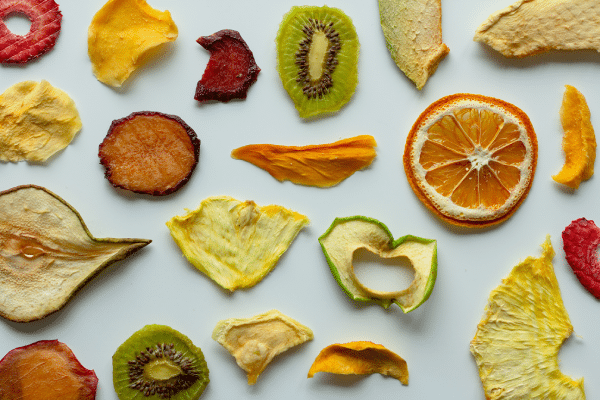
Perhaps you have already enjoyed our dried fruit in raw food quality. You will only find such products denatured in conventional shops.
This means treated with high temperatures and chemicals. Even the organic trade is not aware of thermal denaturation. The raw food gourmet knows that the fruit sugars change at temperatures above 50° C.
The fine, typical fruit flavours are transformed into an intrusive sweetness. And the valuable, health-promoting enzymes are irretrievably destroyed.
Drying in raw food quality is the healthy alternative to traditional preservation methods such as boiling or freezing.
The easy homemade delicacies will enrich your life with new flavours and save you money at the same time. The abundance of nutrients ensures more vitality and zest for life.
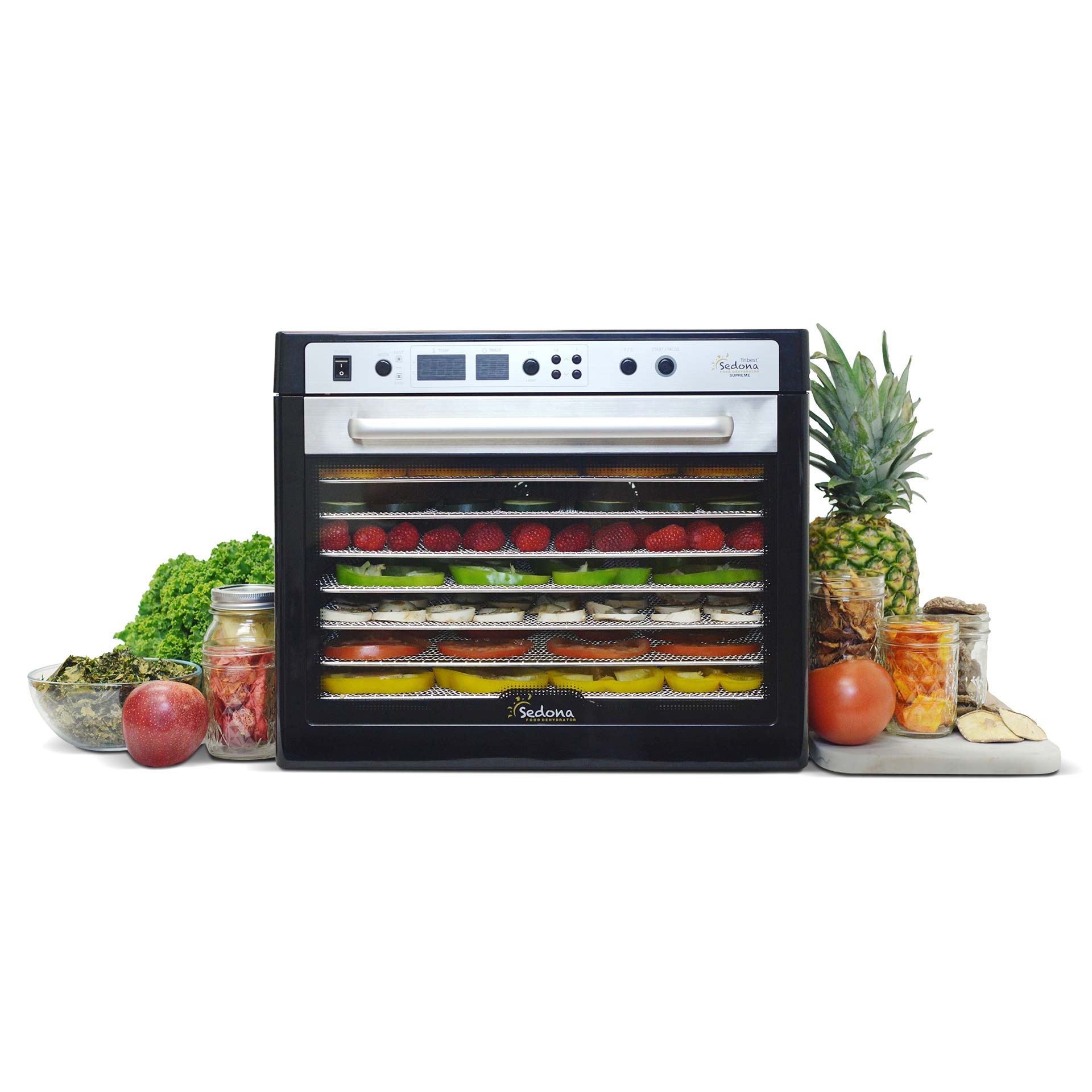
The choice of dehydrator
Scholars and raw food experts argue about the right drying temperature.
If you want to be on the safe side like us, use temperatures below 45° degrees. In the initial phase of the drying process, you can also work with higher temperatures, as the temperature of the air does not correspond to the temperature of the products due to the so-called evaporative cooling. As a rule of thumb, the set temperature can be 10° degrees higher while the food is still moist.
However, if you forget to reset the setting after a few hours or days (depending on what you are drying), you run the risk of losing the valuable enzymes and heat-sensitive vitamins for your health.
Possible applications
Dried fruit is an ideal snack when travelling, cycling, hiking and on excursions where you cannot take large quantities of fresh fruit with you.
Children also love the sweet snacks, which are much healthier and more unusual than sweets and chocolate bars.
Why not give your children dried fruit as a snack at school? You can increase your children's enthusiasm for this healthy snack by involving them in the production process.
Gentle drying is a wonderful way of preserving the annual abundance of fruit and vegetables from your own garden. If you don't have your own garden, you can use the dehydrator to benefit from seasonal offers at the weekly market for a long time. This way, tasty and affordable tomatoes become a culinary highlight in the winter months.
Do you know the situation where you have to eat fruit just because it has to go? Instead of "eating too much and having leftovers", cut the fruit into slices and put them in your dehydrator from today.
Then you can enjoy the delicacies whenever you feel like it. If the dried fruit is stored properly, you can still enjoy it in a few months or even years.
Healthy homemade raw snacks
With a food dehydrator, you can add many flavours to your raw food kitchen: raw food biscuits, sweets, fruit leather, crisps, raw food bread and crackers are a great addition to your vitality kitchen.
The raw food products mentioned usually have a pulpy base. To apply these to the grids, we recommend using dehydrating film or baking paper - although the dehydrating film, which can be reused for years, is much more sustainable.
Tip: Immersion baths before drying are also a wonderful way to vary the flavour of fruit and vegetables. You can use fruit juices, herbal essences or honey water, for example. A soaking time of 10 minutes before drying is usually sufficient.
Optimising flavour with the dehydrator
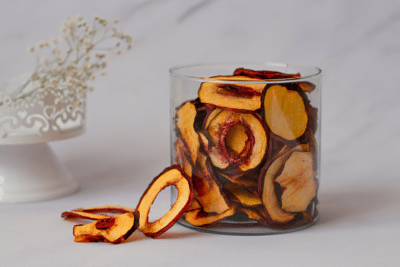
In addition to preservation, your food dehydrator offers you the unique opportunity to optimise flavour. Everyone has experienced how frustrating it can be to eat bland and tasteless fruit and vegetables, especially in the winter months.
In most cases, removing water can improve the flavour and increase enjoyment. Even overripe fruit that has already been alcoholised is still worth a try.
Try just drying fruit. Pineapple rings are delicious after just one day in the dehydrator. They have a crispy, thin skin on the outside and warm flesh on the inside.
An insider tip is avocado boats, which remind you of savoury chips after just a few hours at 40 degrees. Directly from the dehydrator to the plate, you can also have something warm in the raw food kitchen.
We explain how long products need to stay in the dehydrator to be preserved in the following text.
And another variation: Dried celery stalks, onions and other vegetables can also enrich your palette.
Not eaten on their own, but all together in a blender (our Personal Blender - the fast blender is ideal for this) to make a powder: Without any effort, you have your own vegetable concentrate for dips and soups or make your own herb salt and pesto.
Ripening with the dehydrator
You can also "misuse" your dehydrator to ripen fruit more quickly. At temperatures around 30° C, tropical fruit in particular can be ripened wonderfully quickly in a paper bag.
Dried orange slices (as well as other types of fruit) make beautiful window decorations in winter. They can also be used to beautifully decorate flower arrangements and bouquets.
With this other possible use of your dehydrator, temperatures above 40° C may ensure faster completion. Even crackers, crisps etc. that have become too soft can be made tasty again by "baking" them in the dehydrator and do not have to be thrown away.
Examples of dehydration:
Apples:Do not peel. Hollow out with an apple corer and cut into slices (drying time: 1-2 days).
Tip: Remove the top and bottom caps very carefully. These are best eaten fresh or used for other purposes. There won't be much left of them after drying. And thicker end pieces would slow down the drying process too much. Be sure to leave the rest of the peel on.
Avocados.
Peel and cut lengthwise into quarters or eighths (drying time: 2-3 days).
Tip: Always store in the fridge, otherwise there is a risk of a very bitter flavour when the unsaturated fatty acids turn rancid. Much better: After 4 to 8 hours, enjoy warm straight from the drying rack. Particularly popular with former fans of French fries and the like.
Nuts.
Even harvested nuts spoil quickly if not stored properly. Walnuts in particular are known for their susceptibility. Remove the moisture from the nuts after harvesting and you will deprive moulds of the necessary breeding ground.
Tip: Make the drying time dependent on a taste test, the nuts should not become too hard.
Tomatoes:Remove the caps as with apples. Cut into slices in the direction of the equator (drying time: 1-2 days).
Tip: Briefly place the covered grid on an absorbent tray to get rid of excess moisture. This way there is hardly any dripping and a skin will quickly form on the tomato slices.
Berries:Depending on size, cut whole or in halves (drying time: 1-3 days).
Tip: If necessary, use a paper kitchen towel to prevent the fruit from falling through the grids later on.
Corn:Leave the kernels on the cob until they are well dried. Now remove them from the cob and dry them until they are wrinkly (drying time: 1 day).
Melon, pumpkin:Peel, remove seeds and cut into slices 5-10 mm thick (drying time: 1-2 days).
Tip: Dry the seeds separately. They can still be used in your kitchen and are an excellent worm remedy, among other things.
Spinach, leafy vegetables and herbs:Can be spread out on the rack to dry, making sure that the leaves do not lie on top of each other (drying time: 1-2 days).
Courgettes.
Cut into slices 5-10 mm thick (drying time: 1-2 days).
Tip: If you like it crispy and "chipy", keep the slices between 3 and 5 mm and let them dry until they break when bent.
Onion:Skin the onion and cut into rings or cubes.
Tip: Incidentally, onions and leeks lose some of their sharpness this way (drying time: 1-2 days).
How to look after your dehydrator:
The care intervals listed depend on the duration of use, but should always be carried out after a longer period of non-use.
We recommend warm soapy water as a cleaning agent. A sponge is suitable for the appliance housing, a brush for the grids.
The drying films should be cleaned carefully with a sponge that does not scratch the surface. Make sure that not too much liquid and dried fragments from the grids get onto and into the housing. Also clean the surface on which the grilles are stacked or pushed. The easiest way to remove caked-on dried goods residues from the grids is to soak them briefly in water.
If there is still discolouration after cleaning (often with tomatoes), a bath in the sun can bleach away these stains or a cloth with a little cooking oil can help.
If you would like to find out more about dehydrating, download our dehydrating guide here.
Related products
Available, delivery time: 1-3 days
Available, delivery time: 1-3 days
Available, delivery time: 1-3 days