

Interesting facts about omega-3 fatty acids in vegan foods: How to meet your daily requirements with plant-based foods! by raw.vegannette

Omega-3 fatty acids in vegan foods: Your path to better health! 🌱🐟 Find out how to meet your needs with plant-based sources such as linseed, walnuts and algae. Healthy eating made easy! #VeganFood #Omega3 #HealthyFats
Author: Anette Koch (raw.vegannette)
Yes, it's true: Omega-3 fatty acids are extremely important for our health. Depression, Alzheimer's and dementia? No, thank you! Heart attacks and strokes? Hopefully not! And we don't want to get inflammations such as rheumatism, arthritis and multiple sclerosis or macular degeneration with possible blindness either, please.
If you make sure you cover your daily requirement of omega-3 fatty acids as part of a healthy diet, you will inevitably notice a health-preserving and health-promoting effect and prevent numerous diseases. Can I meet this requirement on a vegan diet?
Let's take a quick look at the facts: The human body cannot produce omega-3 fatty acids itself, so we have to get them from food.
Omega-3 fatty acids can be categorised as follows:
- Alpha-linolenic acid (ALA), which is particularly found in linseed oil, hemp oil, walnut oil or, correspondingly, in linseed, hemp seed and walnuts.
- Eicosapentaenoic acid (EPA)
- Docosahexaenoic acid (DHA), both of which are found particularly in oily sea fish such as herring, mackerel or wild salmon. Interesting to know: This fish is so rich in EPA and DHA because it previously ate algae. Here we have it!!! So we don't have to eat fish, but can consume the algae directly.
In addition, our body can convert the short-chain, polyunsaturated omega-3 fatty acid ALA into the long-chain and biologically more active omega-3 fatty acids EPA and DHA.
But beware: this conversion depends on several factors:
The more omega-6 and the fewer omega-3 fatty acids we consume, the worse this conversion is. In fact, an omega-6 to omega-3 ratio of 1:1 to a maximum of 5:1 is ideal.
Unfortunately, the ratio is often significantly higher: Sunflower oil, for example, has a ratio of over 120:1, cashew and hazelnuts 110:1, oats 27:1, olive oil 11:1.
BUT... the situation is different with an omega-6 to omega-3 ratio in e.g. most vegetables and salads at 5:1, walnuts at 4:1, hemp seeds at 3:1, wild herbs such as dandelion at 3:1, chickpeas at 1:1 and linseed oil and chia seeds even at 1:3!
In addition, ageing, smoking, chronic diseases such as diabetes and rheumatism and deficiencies in vital substances - in particular an insufficient supply of zinc, vitamin B6, calcium and magnesium - can impair the conversion.
Back to the initial question: Can I cover my daily requirement of omega-3 fatty acids with a vegan diet?
The answer is obvious: YES, I CAN! Just 1 tbsp of ground linseed, linseed oil or chia seeds or 50 g of walnuts or 2.5 tbsp of hemp seeds added to muesli, a savoury salad bowl or home-baked bread will cover your daily requirement! We also recommend the new omega-3 topping from Naturkost! Keimling Naturkost!
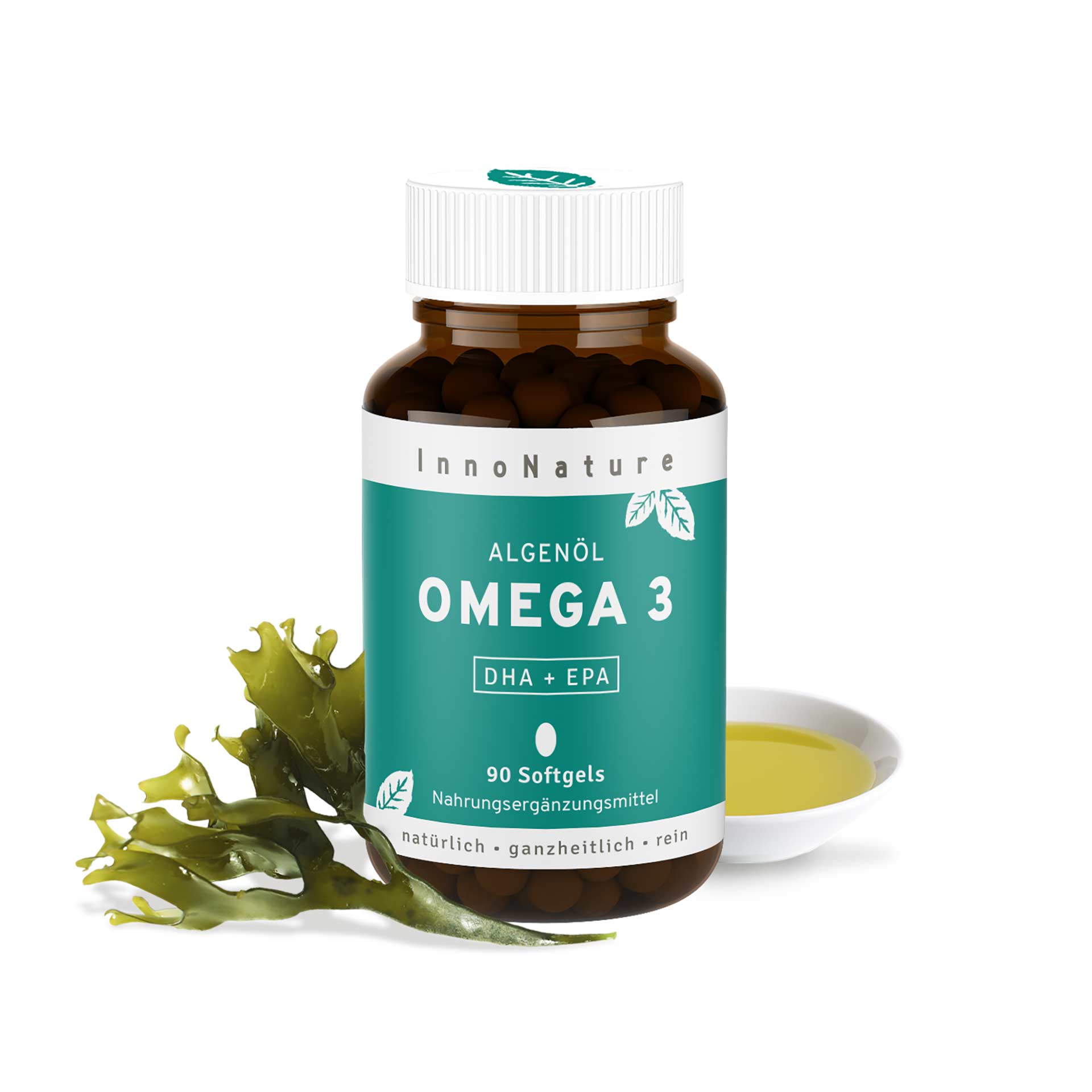
If you have an increased need for omega-3 fatty acids, you can supplement with good omega-3 food supplements such as InnoNature's omega-3 algae oil.
Finally, a medical note: caution is advised when taking certain medications at the same time, as the use of high-dose omega-3 fatty acid products can, for example, increase the effect of anticoagulant medications such as acetylsalicylic acid (ASA).
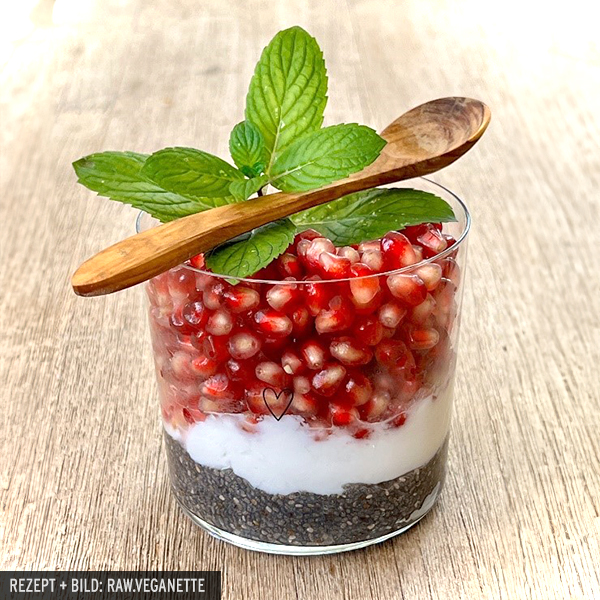
Mix 2 tablespoons of chia seeds (whole or ground) and 8-10 tablespoons of water or oat milk with 2-4 heaped tablespoons of coconut yoghurt.
The chia seeds and water must be stirred frequently during the first few minutes so that nothing settles to the bottom and nothing clumps together.
Serve with fresh fruit, today delicious pomegranate... and bon appétit!
You can find more great recipes and nutrition tips at: https://www.instagram.com/raw.vegannette/